Proceedings · Session S-154 · filed September 30, 2026
Research Funding & PolicySession paper
Madison man admits smuggling lab equipment to Russian firms
A Madison, Wisconsin man has pleaded guilty to smuggling US laboratory equipment to Russian companies, closing a federal export-control case with sentencing still pending.
By Tom Whitfield3 min read525 words
Summary
- A Madison, Wisconsin man pleaded guilty to smuggling laboratory equipment to Russian companies, WLUK reports.
- The case stems from US sanctions and export restrictions targeting Russia, expanded after the 2022 invasion of Ukraine.
- Sentencing has not yet been imposed; the charge carries potential prison time and financial penalties.
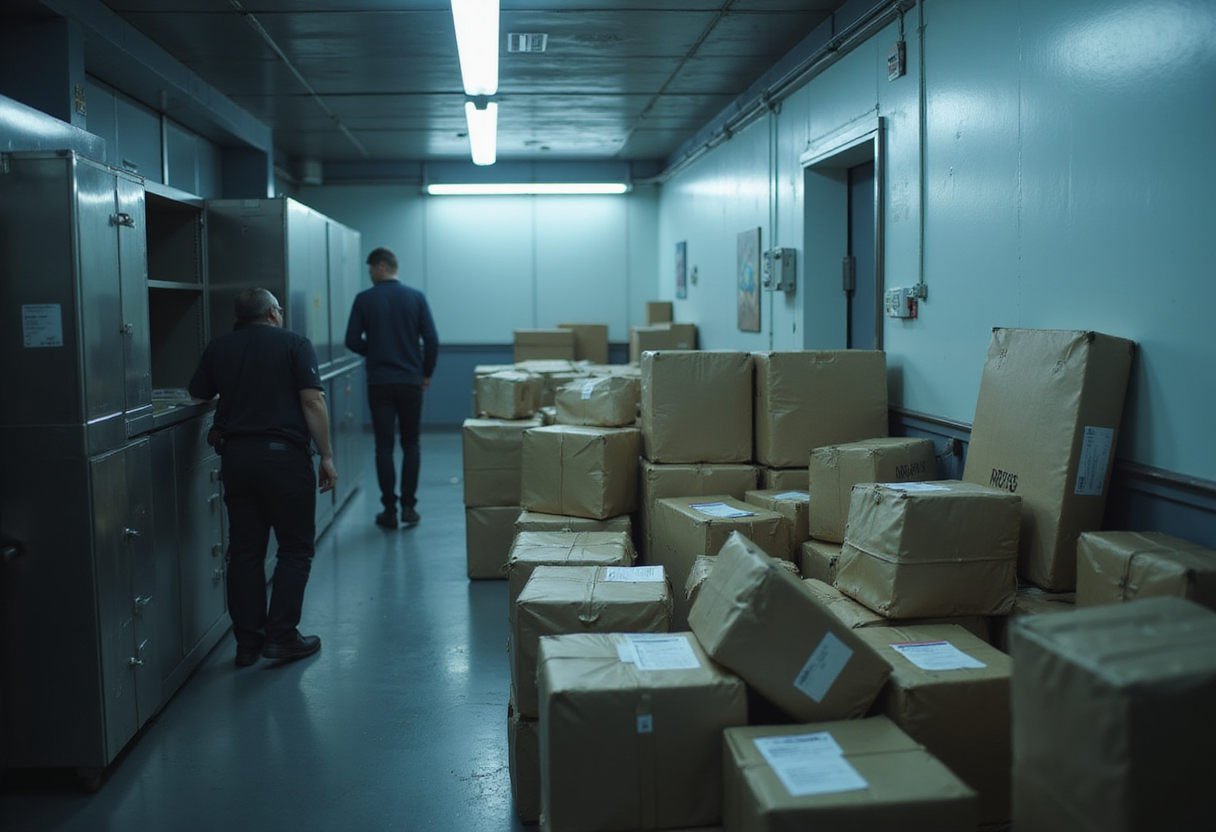
A Madison, Wisconsin man has pleaded guilty to smuggling laboratory equipment to Russian companies, according to a report from WLUK. The plea closes a case that began as a federal export-control investigation and ended with an admission that scientific instruments made their way from the United States to Russian buyers in violation of sanctions and export restrictions.
The defendant, identified in court proceedings as a resident of Madison, entered the guilty plea before a federal judge. Details of the specific instruments involved, the Russian companies that received them, and the financial value of the shipments were outlined in the case record reported by WLUK. The charge — smuggling goods to sanctioned Russian entities — carries potential prison time and financial penalties at sentencing.
For R&D managers and procurement teams, the case is a concrete reminder of how export-control enforcement has reached into the market for ordinary laboratory hardware. Since the United States and its allies expanded sanctions on Russia following the 2022 invasion of Ukraine, dual-use scientific equipment — from analytical instruments to components with potential military applications — has sat squarely within the scope of restricted exports. Federal prosecutors have pursued a steady series of cases involving individuals and intermediaries accused of routing such goods to Russian end users through third countries or falsified paperwork.
The Madison plea fits that pattern of enforcement. Prosecutors have increasingly focused not only on large-scale sanctions evasion networks but on individual actors who use their positions — sometimes as researchers, sometimes as brokers — to move equipment past customs and Commerce Department licensing requirements. Labs that sell, donate, or transfer surplus instruments face the same regulatory perimeter: any transaction that ends with a sanctioned Russian entity as the end user can trigger criminal exposure, regardless of how routine the equipment itself appears.
The sentencing phase will determine the practical consequences for the defendant. Federal guidelines for smuggling convictions typically weigh the value of the goods, the destination, and the degree of concealment. The judge has not yet imposed a sentence, according to the WLUK report.
Compliance officers at research institutions and instrument vendors have taken note of similar cases as justification for tightened end-user verification. Standard practice now includes screening buyers against the Commerce Department's Entity List and the Treasury Department's sanctioned-party lists, and documenting disposal routes for decommissioned equipment. A guilty plea like this one gives enforcement agencies a public data point to cite when pressing institutions on the rigor of their own checks.
The case also lands at a moment when the market for secondhand scientific instruments is growing, driven by lab closures, equipment refresh cycles, and budget pressure at academic and industrial labs alike. Resale channels that once ran on trust and minimal paperwork now carry regulatory risk that many smaller dealers have not fully priced in. The Madison defendant's plea illustrates how quickly an equipment transaction can cross from routine commerce into federal criminal territory when the end user sits behind sanctions lines.
Sentencing in the case remains pending, and further details on the equipment involved and the Russian recipients may emerge in court documents as that proceeding moves forward.
via Google News: Laboratory technology (Source)
Filed under
- export-controls
- sanctions-compliance
- lab-equipment
- russia
- trade-enforcement
More from Tom Whitfield
Show full bio
Senior reporter covering media and advertising at Hypothesis Wire.
92 articles
References
- Wisconsin Man Sentenced to One Year for Smuggling Lab Equipment to Russia
- Watchdog: HHS, USDA Skip Biosecurity Review of Lab Equipment Sales
- Tariffs and Tight Budgets Push Labs Toward Refurbished Equipment
- Beam Therapeutics Sues Former Scientist Over Alleged IP Theft
- Pentagon Orders 30 Universities to Audit Foreign Research Ties