Proceedings · Session S-774 · filed October 28, 2026
Lab Technology & MethodsSession paper
Limerick Team Bridges Digital Validation Gap in Pharma Manufacturing
Limerick researchers built a risk-based model-driven validation workflow, verified a pH controller in a model-based environment, and deployed it on an industrial PLC using IEC 61131-3.
By Sophie Lindqvist4 min read749 words
Summary
- University of Limerick team demonstrated a unified risk-based digital validation workflow for advanced process control.
- A model predictive pH controller used a data-driven Hammerstein-Wiener model and was deployed on an industry PLC in IEC 61131-3 structured text.
- The study was led by Damian McCarthy with senior author Eoin Hinchy; findings published in AAPS PharmSciTech.
- Researchers frame the barrier as organizational and methodological, not regulatory.
- The work is a proof-of-concept, not a pre-validation solution ready for direct deployment.
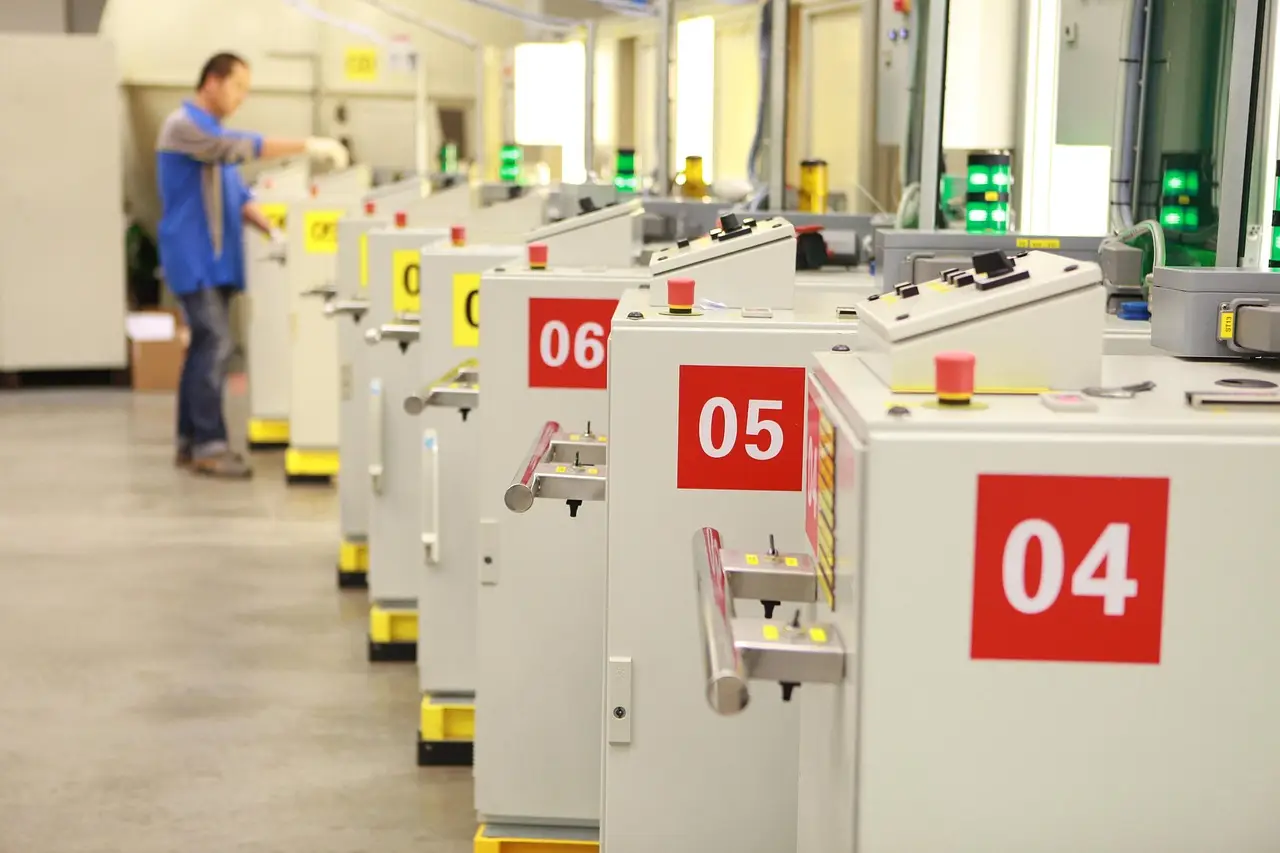
Researchers at the Pharmaceutical Manufacturing Technology Center, University of Limerick, have demonstrated a unified, risk-based digital validation workflow that moves evidence generation from after-the-fact qualification into the engineering lifecycle itself — and they deployed its model predictive pH controller on an industry programmable logic controller (PLC) as a practical proof-of-concept.
The team, led by Damian McCarthy, PhD, staff robotics test engineer, with senior author Eoin Hinchy, PhD, associate professor of automated manufacturing, published the work in AAPS PharmSciTech. The controller for pH regulation used a data-driven Hammerstein-Wiener model to tune the controller and what the researchers describe as a process- and control-focused analysis to identify and prioritize relevant failure modes and inform requirements and verification scope.
The core problem the paper addresses is what the researchers call a digital validation chasm between current good manufacturing practice and adoption of advanced control strategies. Their answer combines process understanding and model-based design with accepted quality risk management and lifecycle-oriented validation principles.
Is the barrier regulatory or organizational?
Dermot McMorrow, PDEng, assistant professor of digital manufacturing at Limerick and one of the researchers, says the gap is not primarily a regulatory one. "Increasingly…it's more about translating risk-based, lifecycle validation principles into day-to-day engineering practice," he told GEN.
"Guidance supports the use of automation, iterative development, digital tools, and critical thinking…but validation is still often implemented through sequential, document-centric qualification activities that are fragmented from engineering development," McMorrow elaborated. "The challenge, therefore, is organizational and methodological — how to integrate process understanding, risk assessment, engineering development, verification, and evidence generation into a coherent lifecycle."
What does the workflow change in practice?
The claimed benefit is structural rather than incremental. "The workflow connects process understanding, quality risk management, controller development, requirements, verification, and deployment within the same engineering lifecycle," McMorrow said. "Rather than treating validation-related verification as something performed after engineering is complete, evidence can be generated as the system is developed."
He added: "The approach also creates explicit traceability from identified risks through functional requirements and acceptance criteria to verification activities and resulting evidence."
That traceability lets verification efforts concentrate on the most relevant risks, supporting both automated repeatable testing and physical challenge testing. Because process changes can be validated relatively easily under the workflow, one practical barrier to continuous system enhancements may be removed.
How did the industrial deployment work?
The team demonstrated in a real-world setting that the controller developed and verified within the model-based environment can be deployed within an industry PLC environment. "Using the standard IEC 61131-3 structured text format also provides an industrially recognized representation of the controller implementation and supports traceability within the wider model-based workflow," McMorrow said.
Related work by the same team has applied model-based validation approaches to both new and existing equipment, including legacy PLC systems — a relevant point for manufacturers weighing retrofit costs against portfolio-wide digitalization.
What should R&D and manufacturing managers take from it?
Implementation, particularly in a highly regulated environment, should proceed iteratively, with ample testing and user feedback, the researchers note. Key points include assessing the maturity of the innovation to be implemented and the organization's readiness for that advancement. The team's prior work provides structured tools, such as an innovation maturity rubric, to guide those assessments.
Evidence from earlier stages of the research program is encouraging but limited. McMorrow's doctoral research found that model-based design-driven digital validation processes streamlined compliance tasks, reduced resource burdens, and enhanced traceability, "demonstrating the framework's practicality in real-world settings."
The proposed workflow "has the potential to reduce reliance on repeated manual testing and documentation," McMorrow said, and thus support the real-time reconfigurations needed in modern production environments.
He draws a firm line between proof-of-concept and deployable product, however. "Any industrial implementation would still need to be incorporated into the organization's own quality system, validation strategy, and regulatory context. The study…is a practical proof-of-concept…rather than a pre-validation solution ready for direct deployment," he cautioned.
For R&D managers, the measured result is a single-controller demonstration plus deployment on standard industrial control hardware; the broader claims about reduced manual testing and real-time reconfiguration remain projections pending wider industrial uptake. The team's next measurable test will be whether organizations adopt the workflow within their own quality systems and report the resource reductions the framework predicts.
via link.springer.com (Original)
Filed under
- digital-validation
- pharmaceutical-manufacturing
- model-based-design
- quality-risk-management
- industrial-automation
More from Sophie Lindqvist
Show full bio
Correspondent covering money, funding and market shifts around research and development at Hypothesis Wire.
205 articles
References
- PharmTech Examines What Actually Drives Tech Transfer Success
- Sterile Injectables to Hit $984B by 2031, Raising Transfer Stakes
- Pharma Online Posts Four-Point CMC Tech Transfer Guide
- Tech Transfer Timelines: CDMO Panel Targets 8 Months Cut to 8 Weeks
- Biologics Fill-Finish Tech Transfer Draws Operational Scrutiny