Proceedings · Session S-900 · filed October 10, 2026
Lab Technology & MethodsSession paper
Lab Equipment Scheduling: The Overlooked Drain on R&D Time and Budget
Lab Manager flags instrument scheduling as an unmanaged cost center: idle capital equipment, blocked experiments and booking practices that erode staff trust.
By Priya Raman3 min read636 words
Summary
- Lab Manager identifies equipment scheduling as a blind spot costing labs time, money and staff trust.
- Common failure modes include double-booking, no-shows and allocation by seniority rather than need.
- Lack of utilization data weakens the case for new instruments and budget defense.
- The article recommends centralized booking, utilization tracking and no-show penalties as remedies.
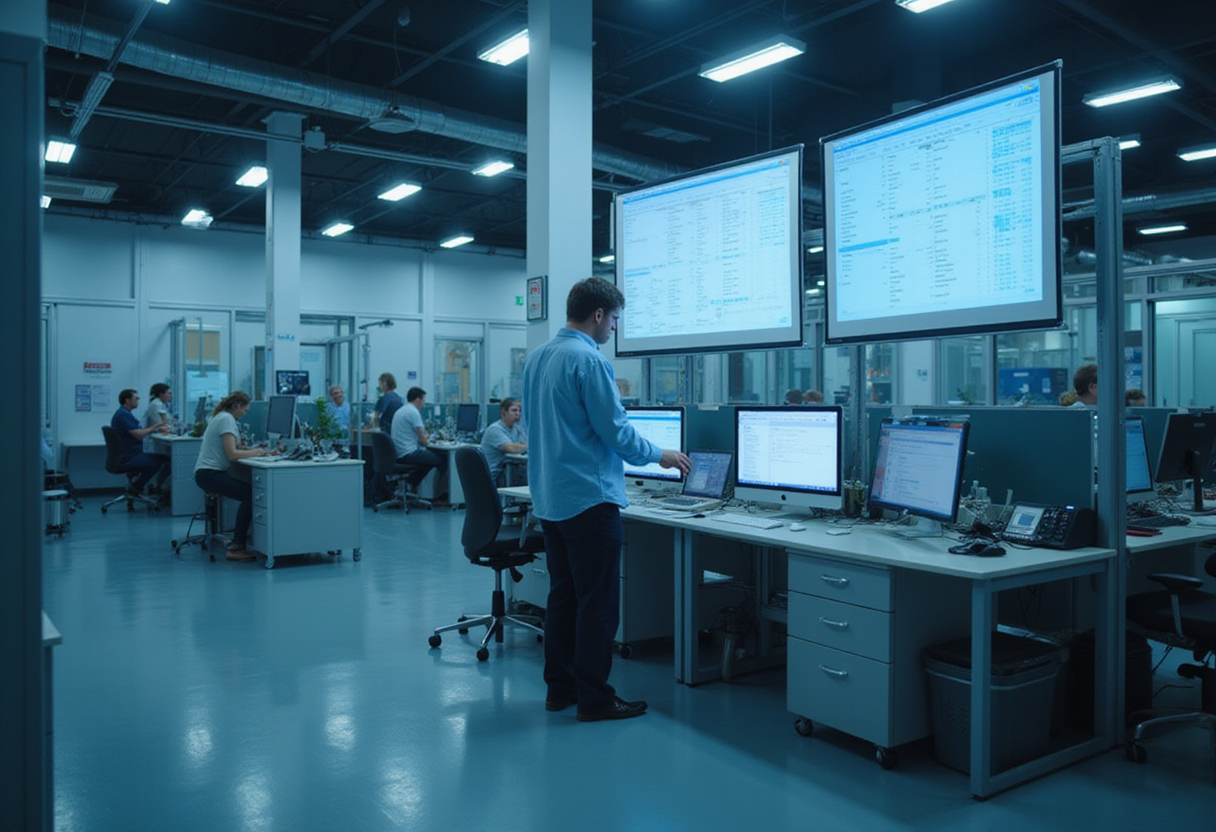
Instrument scheduling remains one of the least-examined operational gaps in research laboratories, and Lab Manager argues the costs run to lost hours, wasted budget and eroded staff trust — not just inconvenient calendars.
The core of the problem, as the publication frames it, is visibility. Labs typically know which instruments they own and what each one cost, but far fewer can say precisely how many hours a shared microscope, sequencer or mass spectrometer actually runs per week, who waited for it, and how much of that waiting translated into delayed experiments. That blind spot sits squarely in the territory of R&D managers: capacity planning, capital allocation and staff throughput all depend on it.
Why does scheduling fail in shared facilities?
Lab Manager points to a familiar pattern. Booking practices in many labs still rely on spreadsheets, paper sign-up sheets or informal agreements between groups. These systems break down in predictable ways:
- Double-booking and no-shows leave expensive instruments idle while other users wait.
- Time slots are allocated by seniority or group politics rather than experimental need.
- Managers lack utilization data, so they cannot tell whether an instrument is genuinely oversubscribed or simply badly booked.
- Maintenance windows collide with scheduled experiments, forcing rework.
Each failure mode carries a direct cost. An idle instrument that consumed capital and service-contract budget produces no data. A researcher blocked from a machine for days may pause a project, stretch a graduate student's timeline, or route work to an external core facility at a premium.
Where does trust enter the equation?
The third cost in Lab Manager's framing — trust — is the one managers most often underestimate. When researchers believe the booking system is unfair or opaque, they respond rationally: they hoard slots, book defensively, or bypass shared facilities altogether. That behavior further depresses effective utilization and pushes more spending toward duplicate equipment.
Trust also extends outward. Core facility managers who cannot document utilization have a weaker case when they request new instruments or defend existing budgets to institutional leadership. Scheduling data, the piece most labs never capture, is exactly the evidence portfolio reviews demand.
What does better scheduling look like?
The article positions scheduling as a management discipline rather than an administrative chore. Effective practice, in Lab Manager's treatment, treats instrument time as a measured, budgeted resource:
- Centralized, visible booking systems that show real-time availability across all shared instruments.
- Utilization tracking that distinguishes scheduled time from actual run time, exposing no-shows and ghost bookings.
- Policies that penalize repeated no-shows and release unused slots automatically.
- Maintenance schedules integrated into the same calendar as experiments, so downtime is planned rather than discovered.
None of this requires new science. It requires managers to treat instrument hours the way they treat reagent inventory or headcount — as a measurable input to planning decisions.
What should R&D managers take from it?
The pragmatic takeaway for lab directors and facility managers is to audit before they buy. Before approving the next capital request for a duplicated instrument, the question to answer is whether existing capacity is genuinely exhausted or simply unbookable. A scheduling audit — measuring requested time versus delivered instrument hours — is cheap relative to a six-figure purchase, and it produces the utilization evidence that both internal reviews and external funders increasingly expect.
For institutions running shared core facilities, the stakes are structural. Utilization statistics increasingly determine fee structures, subsidy decisions and instrument-replacement cycles. Labs that cannot produce those numbers cede the argument to those that can.
Lab Manager's piece closes the loop on its own headline: the scheduling gap costs time, money and trust precisely because it is invisible. Making instrument time measurable, the article suggests, is the first step toward recovering all three — and toward a data basis for the next budget cycle.
via Google News: Laboratory technology (Source)
Filed under
- lab-management
- instrument-scheduling
- shared-facilities
- utilization
- r-d-operations
More from Priya Raman
References
- Lab Manager Weighs Instrument Cost Against Out-of-Box Readiness
- AI-Driven Asset Management Reshapes Lab Equipment Utilization
- Lab Equipment Decisions Deserve Portfolio-Level Scrutiny, Not Procurement Reflexes
- Lab Equipment Metadata for AI: Open-Source, Middleware, or Enterprise?
- THE calls for parity terms for research infrastructure staff