Proceedings · Session S-804 · filed October 28, 2026
Translational ScienceSession paper
Human Challenge Trial Maps How Prior Dengue Immunity Drives Severe Secondary Infection
A controlled human challenge trial infected 45 volunteers with weakened dengue virus, showing which baseline antibodies predict severe versus controlled secondary infection.
By Priya Raman4 min read708 words
Summary
- 45 healthy adult volunteers received a live, weakened DENV3 strain in a Phase I controlled human challenge study.
- Roughly half the world's population is at risk of dengue, with 100–400 million infections per year.
- Baseline antibodies that boosted viral replication in vitro predicted the highest viremia and waning CD8+ T cells and antibodies.
- Higher baseline antibodies against nonstructural protein 1 of multiple serotypes predicted viremia control and durable B and T cell responses.
- The study is published in Science Translational Medicine.
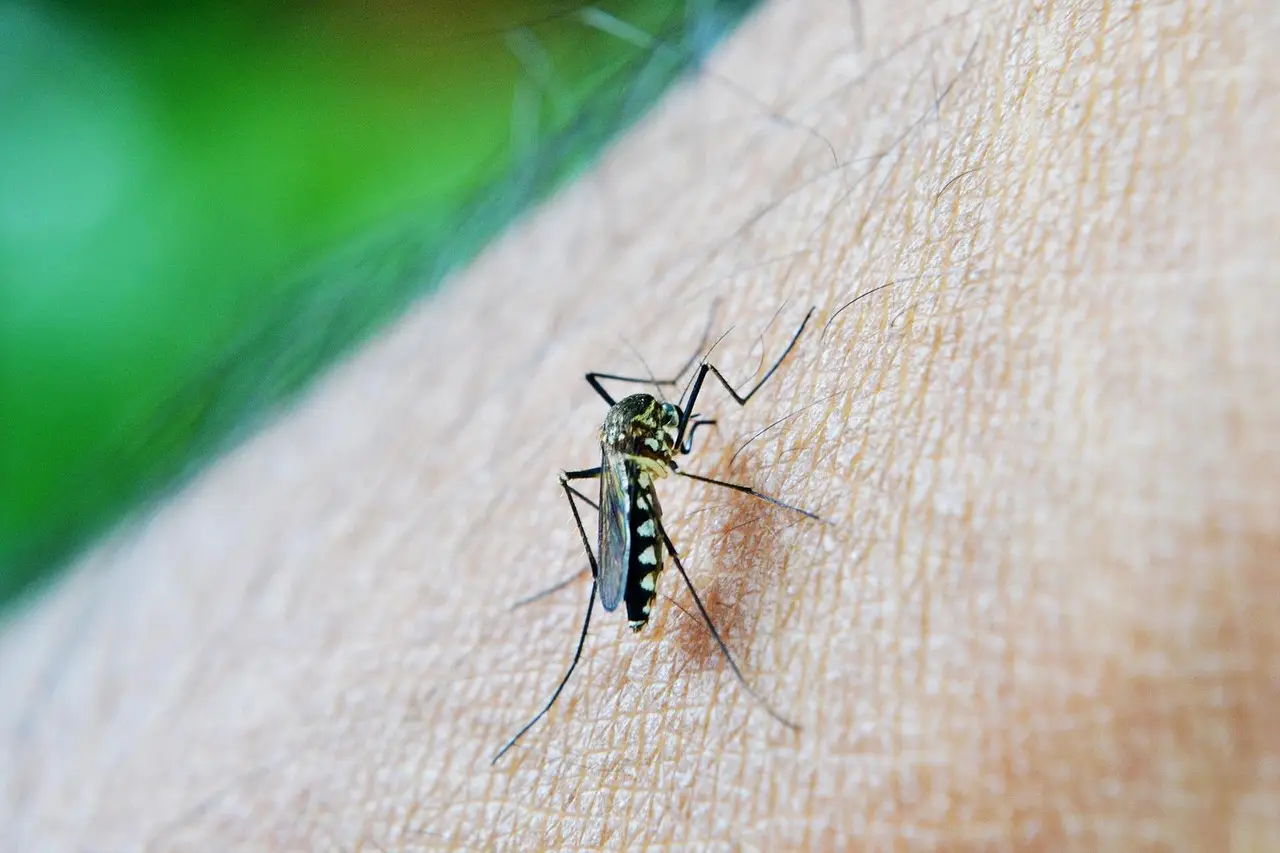
A Phase I controlled human challenge study has infected 45 healthy adult volunteers with a live, weakened strain of dengue virus serotype 3, producing some of the first direct human evidence that the character of preexisting antibodies determines whether a secondary infection escalates or resolves. The paper, published in Science Translational Medicine under the title "Dengue virus controlled human challenge reveals that preexisting immunity shapes viral replication and broadly protective responses," lands in a field where vaccine development has stalled on a hard problem: secondary dengue infections are often more severe than the first.
The global stakes are large. An estimated 100–400 million dengue infections occur each year, and roughly half of the world's population is now at risk, concentrated in tropical and subtropical regions. Prevention currently depends on controlling the mosquito vector that transmits the virus. A vaccine portfolio decision in this space has to reckon with antibody-dependent enhancement — the phenomenon in which preexisting antibodies boost viral replication and raise the risk of severe disease.
Why controlled infection mattered here
The trial design addresses two long-standing evidence gaps. Animal models of dengue have many limitations, and patients in natural infection typically present to clinicians only after viral counts have already peaked, which denies researchers a view of the early immune dynamics that decide outcomes. By deliberately infecting volunteers under controlled conditions, the team could interrogate those dynamics in humans from baseline onward.
The researchers recruited 45 healthy adults stratified by exposure history: some had zero prior dengue infections, some had one, and some had more than one, across any of the four virus strains DENV1 through DENV4. Each volunteer received an injection of the live, attenuated DENV3 challenge strain.
What the measured results showed
The study split the volunteers' outcomes along their baseline antibody profiles, and the differences were measurable and distinct.
- Volunteers whose baseline antibodies most efficiently increased dengue virus replication in an in vitro assay experienced delayed inflammatory and adaptive immune activation, the highest viremia, strong acute immune responses, and waning of potent CD8+ T cells and antibodies.
- Viremia correlated with more, though still mild, clinical signs and symptoms.
- Secondary infection produced greater viremia, higher neutralizing antibodies, and stronger protective T cell responses than primary infection.
- Volunteers with higher baseline antibody levels against the viral nonstructural protein 1 (NS1) of multiple serotypes showed early interferon responses, balanced immune activation, control of viremia, and development of enduring, potent B and T cells.
The NS1 finding carries the clearest read-across for vaccine programs: antibodies against a conserved nonstructural protein, rather than the envelope proteins most vaccines target, predicted the balanced and durable immune profile the field has struggled to induce.
How the authors framed it
The authors write that viremia in the challenge setting "was associated with more, but still mild, clinical signs and symptoms, and secondary infection resulted in greater viremia, neutralizing antibodies, and protective T cell responses." They note that the enhancement-prone profile — baseline antibodies that boosted replication in vitro — tracked with "delayed inflammatory and adaptive immune activation, the highest viremia, strong acute immune responses, and waning of potent CD8+ T cells and antibodies."
In contrast, they report that "higher baseline antibodies against the nonstructural protein 1 of multiple serotypes predicted early interferon and balanced immune activation, viremia control, and development of enduring, potent B and T cells, revealing how vaccines can induce broad, long-lasting protection."
Their summary claim is direct. "Collectively, this work confirms multiple hypotheses generated by natural history studies and reveals the optimal conditions for inducing potent and persistent immunity against DENV1 to DENV4," they write.
Caveats and what comes next
The findings come from a challenge model using an attenuated DENV3 strain in 45 adults, and the clinical signs observed were mild by design; severe disease trajectories in natural infection remain outside what this trial could measure directly. Still, as one of the first large controlled human challenge datasets in dengue, the work gives vaccine and therapeutic developers a concrete immunological target profile — early interferon activation, balanced immunity, and durable B and T cell responses — against which to benchmark candidate designs, and it suggests that future challenge studies can serve as a faster screen for broadly protective vaccine candidates before they reach field trials.
via Genetic Engineering & Biotechnology News (Source)
Filed under
- dengue-virus
- controlled-human-challenge
- preexisting-immunity
- antibody-dependent-enhancement
- dengue-vaccine-development
More from Priya Raman
Show full bio
Staff writer covering money, funding and market shifts around research and development at Hypothesis Wire.
234 articles
References
- Anthropic Reports Five Bioweapon-Linked AI Misuse Cases
- Stanford Medicine lands $18 million to build a universal vaccine
- Vaxcyte's VAX-31 hits Phase 3 endpoints, takes aim at Pfizer and Merck
- Lancet Analysis Maps Africa's Vaccine R&D Gaps
- Autoantibodies Against IL1RA Linked to Preterm Birth in UCSF Study