Proceedings · Session S-212 · filed October 10, 2026
Research Funding & PolicySession paper
Harvard, Trump Administration Clash Over $2.2 Billion in Research Funding
The Trump administration and Harvard University are in an open confrontation over $2.2 billion in federally backed research funding, raising R&D portfolio risk questions for peer institutions.
By Sophie Lindqvist3 min read683 words
Summary
- $2.2 billion in federally backed research funding is at the center of the Harvard–Trump administration confrontation
- The dispute centers on academic freedom, with leverage applied to institutional governance rather than specific research outputs
- Most R1 universities operate on negotiated indirect cost rates between 55% and 70% of direct research spending
- Sponsor diversification runs on grant cycle timescales of 18 to 36 months
- Federal grant closeout procedures can take up to 18 months to resolve cost recovery questions
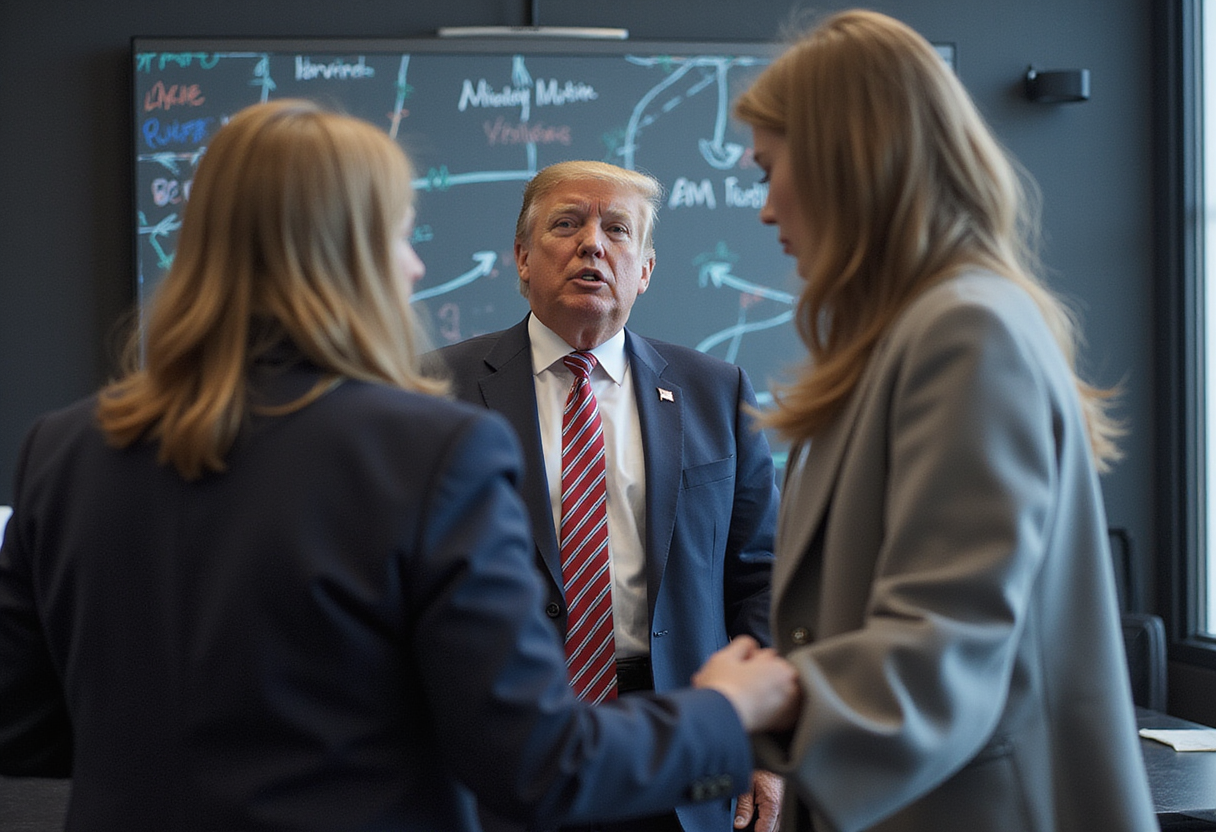
The Trump administration and Harvard University are locked in a public confrontation over $2.2 billion in federally backed research funding, with academic freedom emerging as the central flashpoint, according to reporting from La Voce di New York.
The dollar amount — the scale of federal grants now entangled in the dispute — establishes this as one of the largest single-university funding confrontations in recent memory. For research administrators watching from peer institutions, that figure alone is enough to redraw contingency planning for the current fiscal year.
What does $2.2 billion mean for an R&D portfolio?
For university research offices, federal grants are not discretionary budgets. They are multi-year operating capital that supports specific principal investigators, graduate cohorts, and instrument maintenance contracts. Disruptions cascade through staffing plans that took two to three hiring cycles to build.
A funding freeze of this scale would translate into immediate pressure on indirect cost recovery — the overhead rates that fund the administrative infrastructure research institutions depend on.
Most R1 universities operate on negotiated indirect cost rates between 55% and 70% of direct research spending. Harvard's negotiated rate with federal agencies sits at the upper end of that band, based on publicly available filings.
The indirect cost pool pays for institutional review boards, biosafety officers, grant accountants, and the facility operations that keep cold rooms, clean rooms, and shared instrumentation running. When that pool contracts, the first-line cuts typically fall on administrative headcount and deferred maintenance — both of which create downstream compliance risk.
Why "academic freedom" became the flashpoint
The dispute's framing around academic freedom signals that the administration's leverage is being applied to institutional governance rather than to specific research outputs. When a grant-making agency imposes governance conditions on a recipient institution, the practical question for R&D managers is whether the institution can still deliver the research the funder purchased under the original terms.
This distinction matters operationally. A condition tied to research output — protocol changes, data sharing requirements, scope reductions — has a defined compliance pathway. A condition tied to faculty hiring, admissions policy, or curricular content sits outside the grant agreement and triggers a different set of legal and reputational questions.
For peer institutions, this is the precedent-setting dimension. If the administration can condition federal research funds on governance reform, every R1 university with significant federal exposure sits in the same posture.
How R&D offices typically respond to funding disruption
When federal funding faces disruption, research administration offices have a limited toolkit:
- Diversify the sponsor portfolio to reduce single-funder concentration across the institution
- Activate contingency reserves held in restricted funds, where donor terms and federal rules permit
- Renegotiate indirect cost rate discussions with remaining sponsors to recover overhead shortfalls
None of these levers operate on quarterly timescales. Indirect cost renegotiation runs 6 to 12 months. Sponsor diversification runs on grant cycle timescales of 18 to 36 months. Reserve activation depends on gift agreements written years earlier and is rarely available for federal disruptions specifically.
What the reporting does not yet establish
The available source does not specify which federal agencies hold the contested $2.2 billion, whether the figure represents frozen funds, terminated contracts, conditional awards, or some combination. It does not name the specific conditions the administration has proposed, nor does it indicate whether litigation has been filed or threatened.
For R&D managers modeling the scenario, those distinctions are not academic. A freeze is operationally different from a termination. A conditional award creates a compliance clock. A terminated contract triggers cost recovery questions for expenditures already incurred against the grant — a problem that can take 18 months to resolve through federal closeout procedures.
What to watch over the next 60 days
The next reporting cycle will determine whether this confrontation resolves through litigation, negotiated settlement, or policy reversal at the agency level. The answer will tell R&D managers at every federally funded institution whether to model similar contingencies into the next federal funding request cycle — and how much weight to put on academic governance conditions as a new category of grant risk.
via Google News: Research funding & science budgets (Source)
Filed under
- federal-research-funding
- academic-freedom
- indirect-cost-recovery
- research-administration
- harvard
More from Sophie Lindqvist
Show full bio
Correspondent covering business strategy at Hypothesis Wire.
149 articles
References
- U.S. Science Funding Cuts Raise Risk of Researcher Exodus
- US University R&D Spending Hit $117.7 Billion in FY24, Up 8.1% Year-Over-Year
- Washington University Spent $280,000 Lobbying on Research Funding in Q2 2026
- NSF Is More Than $1 Billion Behind on Grant Awards
- White House Science Report Urges Cutting University Research Funds