Proceedings · Session S-939 · filed September 28, 2026
Research Funding & PolicySession paper
Finland's Steady Energy Wins Funding Backing for SMR Development
Finnish SMR developer Steady Energy has secured funding to advance its reactor programme; award details, including amount and funder, remain undisclosed.
By Sophie Lindqvist3 min read553 words
Summary
- Finland's Steady Energy has been awarded funding to support development of its small modular reactor technology.
- The announcement, reported by Enlit, does not disclose the funding amount, the awarding body, or tied technical milestones.
- Steady Energy's design targets heat supply for district heating networks rather than electricity generation.
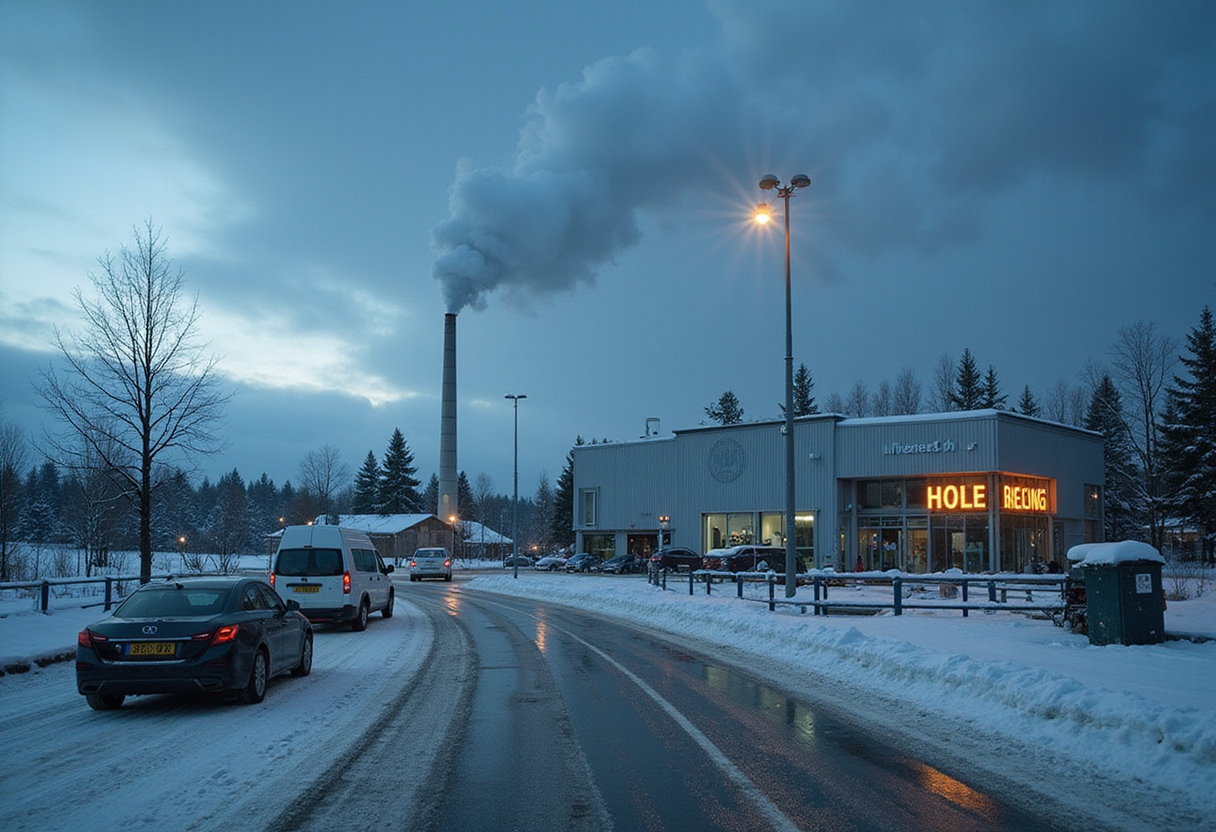
Finnish small modular reactor (SMR) developer Steady Energy has been awarded funding to advance its reactor development programme, according to a report published by energy-sector news outlet Enlit on the announcement.
The award places Steady Energy among the growing roster of European nuclear startups attracting institutional financial backing as governments and utilities reassess modular reactor technology for district heating and industrial heat markets. Details disclosed in the announcement itself remain limited: the report confirms the funding award and its destination — Steady Energy's SMR development work — but does not specify the awarded amount, the funding body, the disbursement schedule, or the technical milestones the money must unlock.
That gap matters for R&D managers and corporate development teams tracking the Nordic nuclear supply chain. Public funding awards in the European SMR sector have ranged widely in scale, from low-single-digit millions of euros for early-stage design and licensing work to substantially larger tranches tied to demonstration-plant construction. Without a disclosed figure, portfolio analysts cannot yet place Steady Energy's award on that spectrum, nor gauge whether it represents seed-stage validation or a commitment to a concrete engineering milestone such as a prototype build or regulator pre-application.
Steady Energy's core proposition, as the company has presented it, centres on reactors designed to supply heat rather than electricity — targeting municipal district heating networks, a market of particular weight in Finland and the wider Nordics, where heating demand dominates urban energy budgets. The company emerged from Finland's broader nuclear innovation ecosystem, which has benefited from decades of operational large-reactor experience and a regulator, STUK, with an established licensing framework.
For prospective customers — municipal energy companies and industrial heat offtakers — the key questions any funding announcement of this kind should prompt are concrete: which design phase does the money fund; what measured performance data, safety case documentation, or licensing submissions will it produce; and on what timeline does the developer commit to delivering them. Vendors' claims about output specifications, passive safety characteristics and construction costs remain projections until validated through regulator review and, ultimately, operating hardware. No measured operational data from a Steady Energy reactor appears in the announcement.
The funding news also arrives amid intensifying European competition in the SMR and advanced-heat-reactor segment. Developers across Finland, Sweden, Poland, the United Kingdom and the Netherlands are pursuing comparable architectures aimed at decarbonising heat, and several have secured both public grants and utility partnerships. In Finland specifically, district heating operators have signalled interest in nuclear heat as a replacement for biomass and fossil-fired capacity, making the domestic commercial environment comparatively receptive.
Steady Energy will now be expected to convert the award into visible engineering progress — design documentation, component testing, licensing engagement — that future funding rounds and customer agreements can be underwritten against. The company has previously indicated ambitions toward building demonstration units in the second half of this decade; as with all pre-construction SMR timelines, those targets should be treated as projections rather than commitments until confirmed by signed construction contracts and regulatory milestones.
Interested parties should watch Steady Energy's subsequent disclosures — the funding amount, the awarding institution, and the stated technical deliverables — which will determine whether this marks routine early-stage support or a material step toward a first-of-a-kind plant.
via Google News: R&D funding (Source)
Filed under
- small-modular-reactors
- nuclear-energy
- district-heating
- finland
- startup-funding
More from Sophie Lindqvist
Show full bio
Correspondent covering business strategy at Hypothesis Wire.
86 articles
References
- Estonia on Track to Miss 1% of GDP R&D Spending Target in 2027
- MIT Team Proposes 'Economic Q' Metric to Judge Fusion Plant Viability
- Estonia's R&D Funding May Miss 1% of GDP Target Next Year
- US Department of Energy Opens $400 Million Research Funding Window
- DOE Surfaces Details of Small Innovative Projects in Solar Program