Proceedings · Session S-528 · filed October 10, 2026
Research InfrastructureSession paper
Ferris State lands $1.92M NIST grant anchored by 500 MHz NMR
NIST awarded Ferris State $1.92M for research infrastructure, including a $1M 500 MHz NMR with cryoprobe, to expand drug-resistant cancer research.
By Sophie Lindqvist3 min read675 words
Summary
- Ferris State University received $1.92 million from NIST to upgrade research infrastructure.
- The 500 MHz NMR spectrometer with cryoprobe cost nearly $1 million of the grant total.
- The funded research targets drug-resistant cancers and drug degradation/stability.
- Ferris State trains 650+ undergraduates and ~400 pharmacy doctoral candidates annually; 92% of Michigan students stay in-state.
- The grant followed a House proposal supported by Rep. John Moolenaar, R-Michigan.
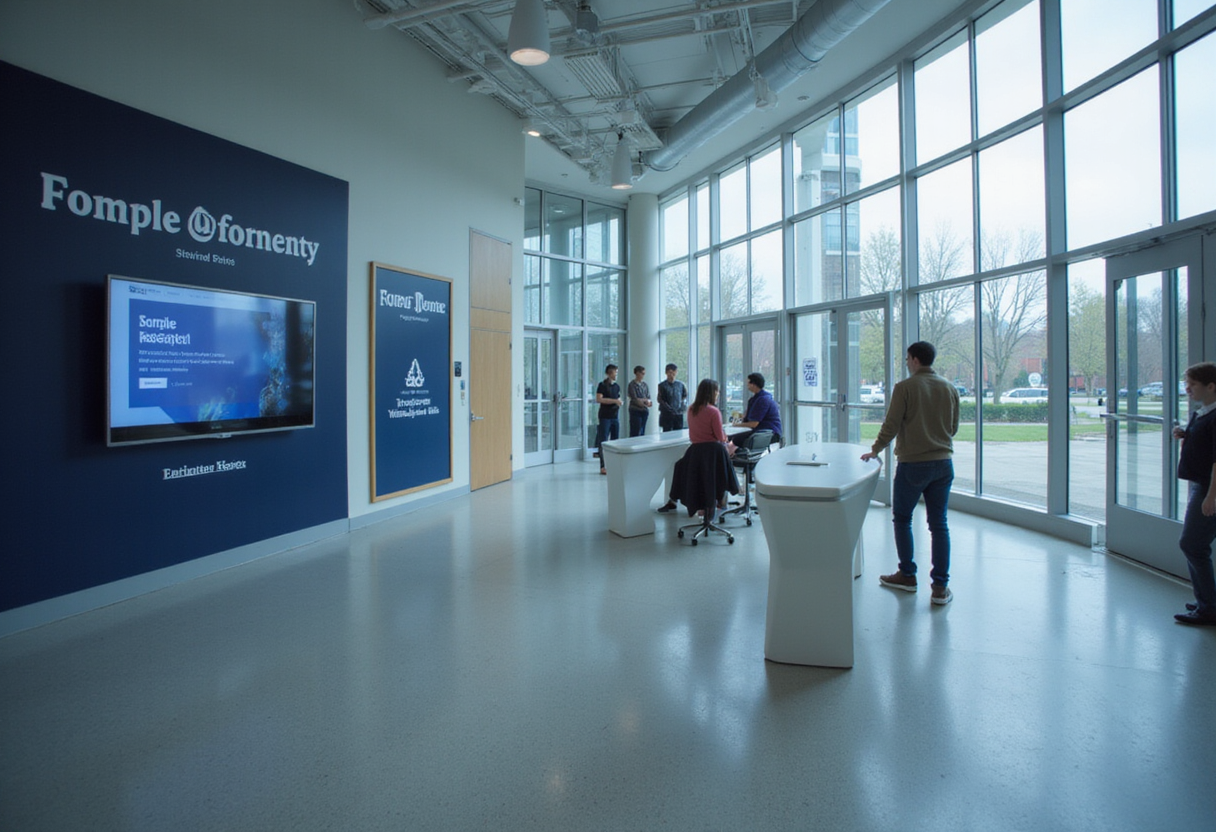
Ferris State University has received $1.92 million from the U.S. Department of Commerce's National Institute of Standards and Testing (NIST) to rebuild its research infrastructure, with nearly $1 million of that sum going to a single instrument: a 500 MHz nuclear magnetic resonance spectrometer with cryoprobe.
The Big Rapids, Michigan institution says the funding directly addresses deficiencies it had already identified in its analytical capabilities. "We have identified deficiencies in research infrastructure and coupled this with our desire to enhance innovation and resource capacity across the University," said Dr. Thomas Dowling, director of Ferris State's Office of Research and Sponsored Programs and a professor in the College of Pharmacy.
What does the money buy?
The grant funds a suite of laboratory instruments that most mid-size research operations would recognize as core-capacity purchases:
- A 500 MHz NMR spectrometer with cryoprobe (nearly $1 million)
- A high-end mass spectrometer with liquid chromatography and solid analysis probe capabilities
- A benchtop LCMS
- A flow cytometer
- A particle size analyzer
- A gas chromatograph
- A backup power generator for emergency preparedness
The university will also hire a laboratory chemical analyst to handle equipment integration, training and protocol development — a staffing line that often determines whether new instruments actually enter routine workflow or sit underused.
Dr. Sonali Kurup, a professor of Medicinal Chemistry, confirmed the equipment is already operational and has changed what campus researchers can do in-house. "The NIST grant provides access to the most advanced instruments, including a 500 MHz NMR, a high-end mass spectrometer with liquid chromatography and solid analysis probe capabilities, a flow cytometer and a particle size analyzer," Kurup said. "This funding has significantly advanced campus research, empowered faculty to pursue new research areas and expanded opportunities for student training and participation."
Why the NMR matters
Dr. Eric Nybo, also a professor of Medicinal Chemistry, placed the 500 MHz instrument in competitive context. "Ferris State's 500 MHz NMR with cryoprobe places the university among a select number of colleges with this level of instrumental capability," Nybo said. "It sustains Ferris State's position at the forefront of medicinal chemistry while giving students direct access to advanced research tools."
Before the grant, Ferris State researchers faced a constraint familiar to many non-R1 institutions: limited access to advanced chemical analysis equipment forced some analyses offsite, slowing project timelines and weakening the university's position in competitive research. The project documentation anticipates that high-performance NMR instrumentation will significantly cut experiment turnaround times.
What is the research target?
The funded project focuses on the design, synthesis and evaluation of novel chemical compounds, specifically those targeting drug-resistant cancers. It also aims to improve understanding of drug degradation and stability — a formulation-critical question for any compound moving toward translational work.
The university frames the disease targets as cancer, diabetes and heart disease, conditions it says disproportionately affect rural and underserved populations in Michigan. Ferris State argues its researchers hold a direct understanding of rural health needs that larger institutions often lack.
What are the workforce and portfolio stakes?
Ferris State trains more than 650 undergraduates and roughly 400 pharmacy doctoral candidates annually in STEM and health-related fields. Of its Michigan-drawn students, 92% remain in-state after graduation — a retention figure relevant to any regional biomedical pipeline assessment.
Previously, limited instrument access constrained hands-on training. The university expects benchtop equipment in core laboratories to give undergraduates earlier access to research, reduce faculty burden and build student confidence earlier in their academic careers.
The grant originated from a proposal submitted to the House of Representatives and was supported by U.S. Rep. John Moolenaar, R-Michigan. The proposal lays out three long-term goals: strengthening existing cancer research capabilities, addressing the biomedical workforce shortage through STEM career preparation, and promoting equity in research opportunities for rural institutions.
Ferris State anticipates the infrastructure investment will strengthen its competitiveness for future research funding and its contribution to regional and national scientific priorities, as well as improve its position in faculty recruiting.
via Google News: Research infrastructure & national labs (Source)
Filed under
- ferris-state-university
- nist-grant
- research-infrastructure
- nmr-spectroscopy
- medicinal-chemistry
More from Sophie Lindqvist
Show full bio
Correspondent covering business strategy at Hypothesis Wire.
149 articles
References
- UIC Research Funding Reaches $498M in Fiscal 2026
- Ohio State reports record $1.68 billion in R&D for FY2025
- University of Iowa Puts $15M Into Brain Science and Cancer Lab Buildout
- NSF Commits $100M to National Quantum and Nanotechnology Research Infrastructure
- California Senate Clears Bill Creating $12B State Research Fund