Proceedings · Session S-602 · filed October 30, 2026
Research Funding & PolicySession paper
DOE’s $15 million accelerator plan shifts to large teams
DOE selected 14 accelerator projects for $15 million and will require university-led teams with at least three PIs for fiscal 2027 grants worth $3.75 million to $7.5 million.
By Tom Whitfield4 min read762 words
Summary
- DOE selected 14 projects across 29 institutions for $15 million on Oct. 26.
- Fiscal 2027 team awards require at least three institutions and three PIs and range from $3.75 million to $7.5 million over five years.
- DOE will not renew current single-PI basic-research awards beyond Aug. 31, 2027.
- DOE expects one team in each of five topic areas; existing single-PI awards average about $500,000 over three years.
- Half of the 14 funded projects focus on superconducting technology.
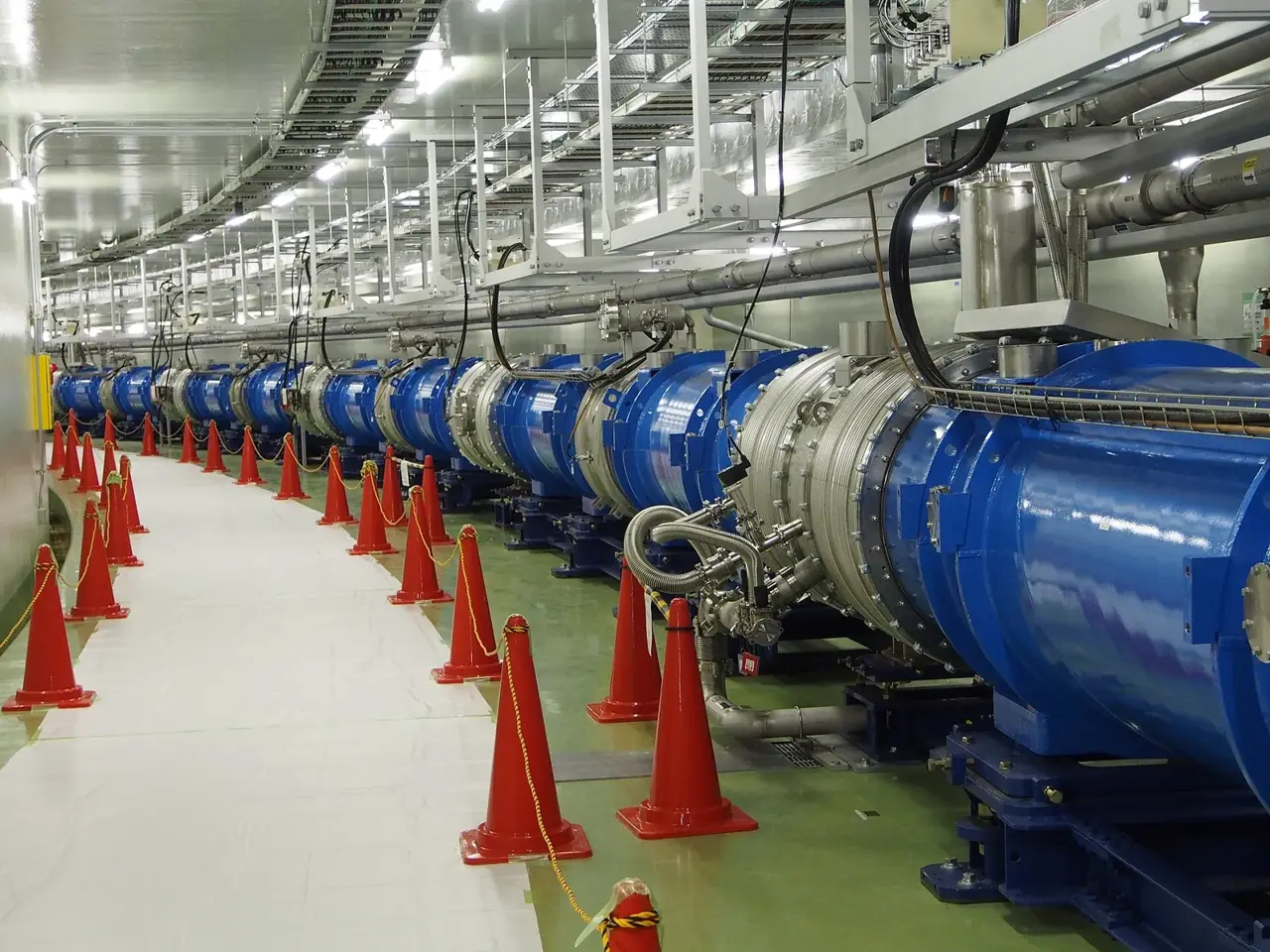
On Oct. 26, the U.S. Department of Energy selected 14 projects across 29 institutions to receive $15 million through its Accelerator Stewardship and Accelerator Development programs, funding accelerator work for medicine, industry, security and a U.S. supplier base.
DOE said the projects will “advance accelerator technologies that drive scientific discovery, healthcare innovation, and economic competitiveness while strengthening national security.” The statement sets program goals rather than measured results; the announcement gives no project-level budgets, technical milestones or performance data.
What changes for principal investigators?
DOE’s fiscal 2027 funding documents make the next basic-research round of the stewardship program available only to multi-university teams. DOE will not renew any current single-principal-investigator award beyond Aug. 31, 2027; the first team awards start Sept. 1.
The replacement, called “Collaborative Accelerator Research Teams,” requires at least three institutions and three principal investigators, led by a university. Each team can receive a renewable, five-year award of $3.75 million to $7.5 million, according to DOE’s funding documents.
For comparison, DOE’s FAQ says single-investigator awards in the track generally average about $500,000 over three years. DOE expects one team in each of five fiscal 2027 topic areas, making the planned awards longer and larger than the grants they replace.
- Beam dynamics and controls.
- Emerging acceleration concepts.
- Particle sources.
- Superconducting magnets.
- Superconducting radio-frequency technology.
DOE frames the shift as a response to more complex research problems and workforce needs. Its funding-call slides also direct teams to integrate artificial intelligence and machine-learning tools and connect with the Genesis Mission, DOE’s initiative to accelerate science with AI. That language defines solicitation priorities, not demonstrated gains in accelerator performance.
In December 2025, the National Science Foundation announced a “Tech Labs” initiative, with large, multiyear awards for full-time research teams outside universities. NSF said “complex science increasingly requires cross-disciplinary teams.” DOE’s rule differs structurally: a university leads a consortium of at least three institutions and three PIs, while NSF’s program targets non-university research teams.
How did DOE reorganize the program?
During an internal reorganization, DOE’s Office of Science moved the Office of Accelerator R&D and Production into the Office of High Energy Physics, which now runs the stewardship program. DOE’s funding-call FAQ says the move will have little effect on applicants this year.
DOE also retired or redirected four elements:
- BeamNetUS replaced the track that funded researchers’ use of DOE accelerator test facilities; the network offers one portal for particle-beam-time applications across national laboratory facilities.
- A track that funded accelerator-sector business plans ended.
- The particle-beam-therapy topic accepted renewals only this year.
- DOE dropped the topic on expert accelerator control systems and directed researchers to pursue that work through the Genesis Mission.
The current award cycle is a transition. Principal investigators whose basic-research awards ended in fiscal 2026 could apply only for one-year terminal renewals, described in the source as a final extension before those awards end.
Where is the $15 million going?
DOE says the program typically awards about $1 for every $7 requested. The ratio provides a budget benchmark for applicants, but the announcement does not disclose request totals, individual selections or review scores, so managers cannot compare project budgets or technical merit from the release alone.
Half of the 14 projects focus on superconducting technology. Four target superconducting radio-frequency cavities, the structures that accelerate particle beams, while three companies will work on domestic production of superconducting wire and cable.
Three projects advance high-power ultrafast laser technology. The remaining four cover a new linear accelerator design for radiotherapy and security, laser wakefield acceleration, photocathodes and accelerator physics.
What remains unresolved?
DOE’s webinar slides say funding calls usually post early in the calendar year, and the slides’ timeline sets the first team awards for Sept. 1, 2027. Applicants therefore face a policy change before they have a detailed fiscal 2027 solicitation to work from.
DOE’s funding documents do not say what support, if any, will go to single-investigator groups that do not join a team, or to graduate students supported by expiring grants. DOE did not respond to a request for comment before publication, leaving those portfolio and workforce costs undefined.
Until DOE publishes the fiscal 2027 solicitation and transition terms, research managers should treat $3.75 million to $7.5 million as a planned award range, not a committed project budget, and plan around the Aug. 31, 2027 cutoff for single-PI renewals.
via science.osti.gov (Original)
Filed under
- department-of-energy
- accelerator-r-d
- particle-accelerators
- research-grants
- multi-institution-teams
More from Tom Whitfield
Show full bio
Senior reporter covering technology and product news in research and development at Hypothesis Wire.
243 articles
References
- DOE opens $400 million basic research funding solicitation
- US Department of Energy Opens $400 Million Research Funding Window
- California Senate Clears Bill Creating $12B State Research Fund
- UIC Research Funding Reaches $498M in Fiscal 2026
- Trump's $200 Billion Research Reset Redirects Funds Past Universities