Proceedings · Session S-810 · filed October 3, 2026
Research Funding & PolicySession paper
DOE Surfaces Details of Small Innovative Projects in Solar Program
DOE has posted a listing for its Small Innovative Projects in Solar (SIPS) Program on a .gov domain; award terms and topic areas remain unpublished.
By Amara Osei3 min read599 words
Summary
- The U.S. Department of Energy has published a listing for the Small Innovative Projects in Solar (SIPS) Program on an official .gov domain.
- The source item contains no award figures, deadlines, topic areas, or named officials; primary solicitation documents on energy.gov will govern any funding decision.
- The SIPS name implies DOE's small-project model: short-duration, low-dollar awards for early-stage feasibility determinations in solar research.
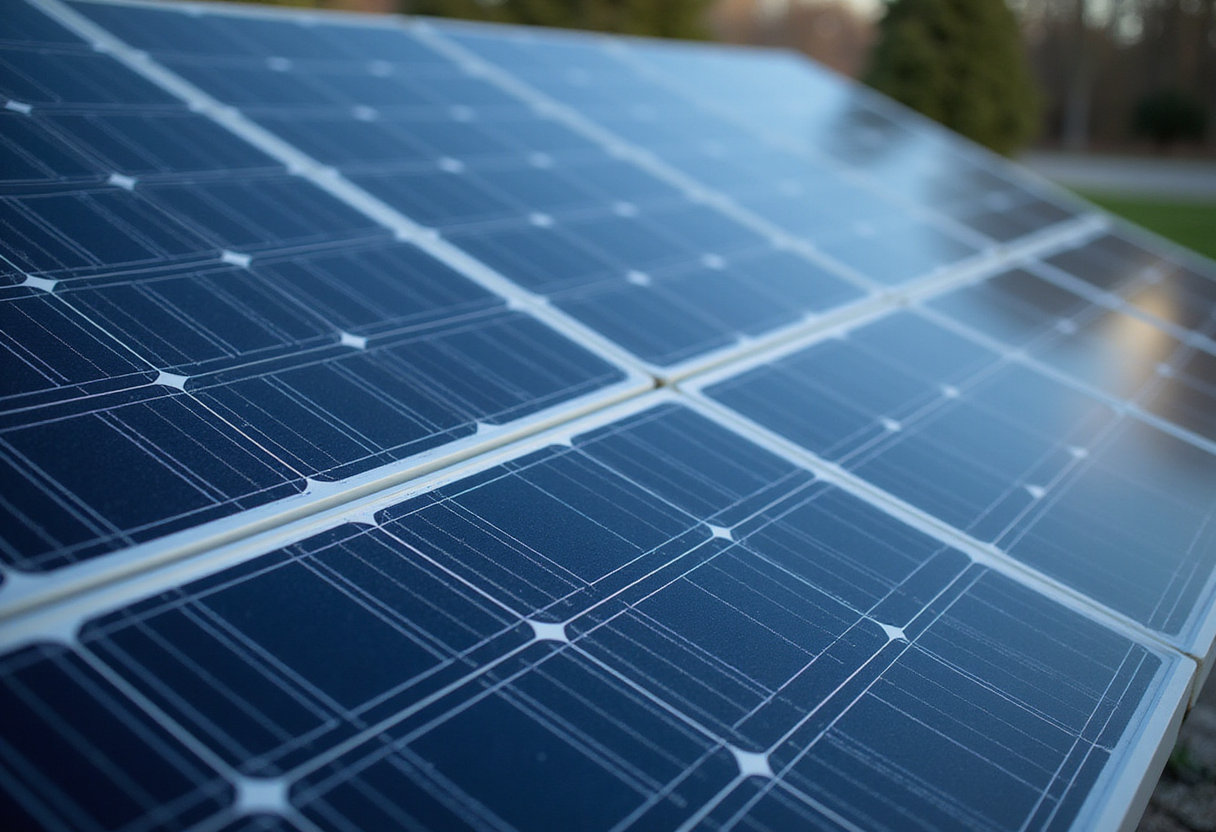
The U.S. Department of Energy has published a listing for its Small Innovative Projects in Solar (SIPS) Program on a .gov domain, according to a new feed item surfaced through Google News aggregation.
That is the concrete fact: a federal agency page, on an official government domain, now carries program information under the SIPS name. What the listing does not yet disclose — award ceilings, cost-share terms, submission windows, or technical topic areas — will determine whether the program merits a slot in a solar R&D portfolio this cycle. Researchers and R&D managers tracking DOE solar funding should treat the page as a pointer to primary solicitation documents rather than a substitute for them.
The program's own name carries structural information worth parsing. "Small Innovative Projects" signals a funding model DOE has used across its applied energy offices: short-duration, low-dollar awards aimed at proving or disproving a concept quickly, before a technology competes for larger, milestone-driven program dollars. Where DOE has run SIPS-branded competitions historically, the model has emphasized early-stage risk reduction — high technical risk, modest budgets, and a deliverable that is a feasibility determination rather than a demonstration unit.
The caveat is explicit: the source item available at publication time is a link and an attribution to the Department of Energy. It contains no figures, no named principal investigators, no measured results, and no quoted officials. Any characterization of award size, duration, or selection criteria beyond what the program name implies would be speculation, and this outlet does not engage in it. What can be verified is the existence of the program listing on a .gov domain and its surfacing in a news feed as of the item's publication.
For lab managers, the practical question is triage. A SIPS-style solicitation, if it follows the model the name implies, typically rewards teams that can state a crisp technical hypothesis, identify a bounded experiment, and commit to a go/no-go answer within roughly a year. That profile suits universities and national labs with an unproven concept and limited tolerance for multi-year reporting overhead. It suits industrial groups less well unless they can absorb federal cost-share requirements — terms the listing has not yet specified.
The interrogation checklist for anyone evaluating this opportunity should start with the documents themselves, once located on the DOE site. First, the funding ceiling per award and the expected number of awards, which set the ratio of proposal effort to expected return. Second, cost-share obligations, which for-profit applicants often face at higher percentages than universities. Third, the topic areas — whether the program targets photovoltaics, solar-thermal, grid integration, or manufacturing — since that scoping determines which portfolio a proposal strengthens. Fourth, the eligibility constraints, which affect whether national laboratories, startups, and university teams compete in the same pool or separate ones.
None of those parameters appear in the feed item. All of them will appear in the primary solicitation or program page on energy.gov, which is where a funding decision should be grounded.
There is also a portfolio-timing consideration. Solar R&D funding at DOE moves on a fiscal-year rhythm, and a program surfacing in an agency listing now suggests activity in the current cycle. Teams that wait for secondary coverage of the solicitation risk compressing their proposal timeline; teams that act on the .gov listing directly can begin lining up letters of intent and internal approvals while the details crystallize.
Hypothesis Wire will track the program page and report award figures, deadlines, and topic areas as DOE publishes them.
via Google News: R&D funding (Source)
Filed under
- doe
- solar-energy
- research-funding
- sips
- early-stage-research
More from Amara Osei
References
- DOE Opens $12M Funding Round for Space-Grade Photovoltaics
- US Department of Energy Opens $400 Million Research Funding Window
- DOE Hydrogen Office Widens University Funding, Adds Lab Projects
- US National Labs Coordinate Multi-Agency Solar Cybersecurity Standards
- States Weigh Own Science Funding as Federal Research Outlook Dims