Proceedings · Session S-916 · filed October 10, 2026
Research Funding & PolicySession paper
DOE National Labs Build Digital Models for Hydropower Plant Operations
A DOE release confirms national laboratories are advancing work to build digital models of hydropower systems, but names no lead laboratory, sets no funding figure, and offers no delivery milestone.
By Tom Whitfield2 min read498 words
Summary
- DOE confirms national laboratories are advancing an effort to build digital models of hydropower systems
- Release names no lead laboratory, sets no funding figure, and gives no delivery milestone
- The work is framed as decision-support for plant operations, not research-grade simulation
- No partner utilities, model fidelity targets, or licensing terms are disclosed in the release
- Next actionable signals to watch: a named lead lab with a project page, or a formal funding opportunity announcement
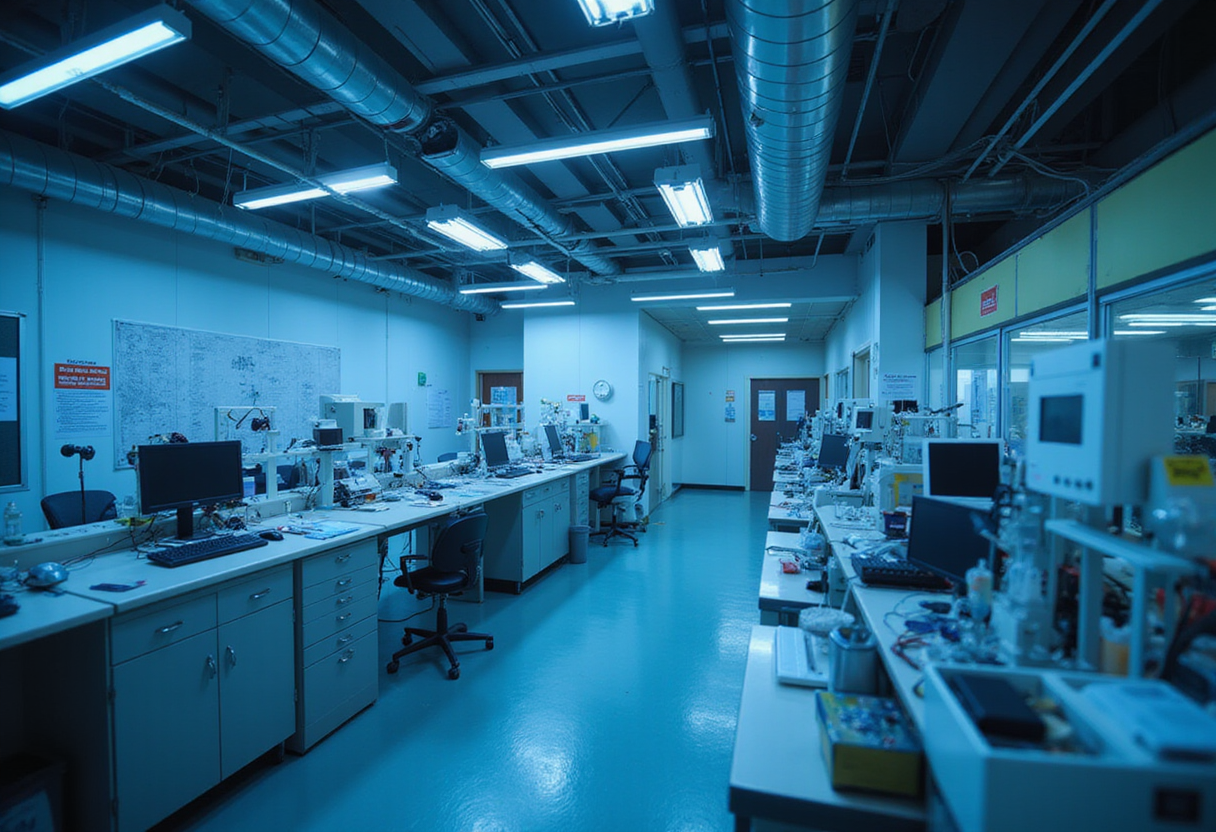
The U.S. Department of Energy has confirmed that its national laboratories are advancing work to build digital models of hydropower systems aimed at supporting plant operations and decision making. The announcement names no lead laboratory, sets no funding figure, and gives no completion milestone.
For an R&D audience the announcement functions less as a delivery event than as a directional signal. It confirms that the federal laboratory complex continues to treat hydropower as a target for digital-modeling investment at a moment when simulation-based operations have become a routine expectation across other generation classes.
What "digital models" actually change for plant operators
Digital models let engineers test operating choices against a virtual plant before committing hardware. In a hydropower setting, the release's decision-support framing points toward operator-facing tools that typically combine:
- Turbine performance curves
- Reservoir and penstock hydraulics
- Generator electrical behavior
- Grid-side constraints
A control-loop twin usable in real time is a different engineering deliverable from a planning-grade simulator run in batch on historical data. The release does not distinguish between the two. For R&D managers, model fidelity — not the existence of a model — is the variable that matters.
Why the lab complex, and why now
Federally funded laboratories operate on multi-year program cycles and routinely take on infrastructure-modeling assignments where commercial vendors cannot absorb the full cost of validation. A national-lab effort can aggregate data across multiple sites, an option typically closed to single vendors serving a single utility.
That structural role, however, also means lab deliverables tend to arrive more slowly than vendor products, and they often arrive as methods or reference datasets rather than finished software. R&D teams planning to consume the output should already be budgeting for integration work and for the staff time required to map federal deliverables onto existing operational technology stacks.
What the announcement leaves unspecified
Three items researchers and utility R&D directors will look for in a follow-up release: the lead laboratory, the funding vehicle, and any pre-committed utility partners. The release contains none of these.
Equally missing is any reference to model release terms. Past federal hydropower-modeling work has produced both open-source packages and licensed deliverables; the licensing posture affects whether the work displaces, augments, or simply benchmarks existing utility-side tools.
How R&D leaders should respond
For now, the practical move for R&D and operations leaders is monitoring rather than contracting. Two next-step signals would convert this announcement into something actionable: a named lead laboratory with a project page, or a funding opportunity announcement that opens a subcontractor pathway. Neither has appeared in the materials currently available.
The forward read is that federal digital-modeling investment in hydropower has moved from background noise to something the lab complex is willing to put its name on. Until the program parameters surface, that is the extent of what a reader can responsibly conclude from the single-paragraph release.
via Google News: Research infrastructure & national labs (Source)
Filed under
- hydropower
- digital-modeling
- national-labs
- doe
- r-d-strategy
More from Tom Whitfield
Show full bio
Senior reporter covering media and advertising at Hypothesis Wire.
190 articles
References
- DOE Labs Deploy $7.1 Million in New Marine Energy Test Infrastructure
- DOE Hydrogen Office Widens University Funding, Adds Lab Projects
- US Department of Energy Opens $400 Million Research Funding Window
- Sandia field-tests AI voltage control at two Texas grid sites
- DOE Opens Funding Route for Companies to Work with National Labs