Proceedings · Session S-435 · filed October 10, 2026
Lab Technology & MethodsSession paper
Deisseroth, Hegemann, Nagel win 2026 Nobel for optogenetics
Three researchers share the 2026 Nobel Prize in Physiology or Medicine for optogenetics work. The Karolinska Institutet cited Karl Deisseroth, Peter Hegemann, and Georg Nagel for light-gated ion channel discoveries enabling cell-level control in living brains.
By Rebecca Stone3 min read640 words
Summary
- The 2026 Nobel Prize in Physiology or Medicine was announced on Monday by the Karolinska Institutet in Stockholm
- Joint recipients: Karl Deisseroth (HHMI/Stanford), Peter Hegemann (Humboldt University), Georg Nagel (University of Würzburg)
- Citation: "for their discoveries concerning light-gated ion channels and optogenetics"
- The method pairs light with genetically modified neurons to switch individual cells on or off in a living brain
- The Karolinska announcement states the approach is being studied as a potential treatment for disease, without naming a specific indication
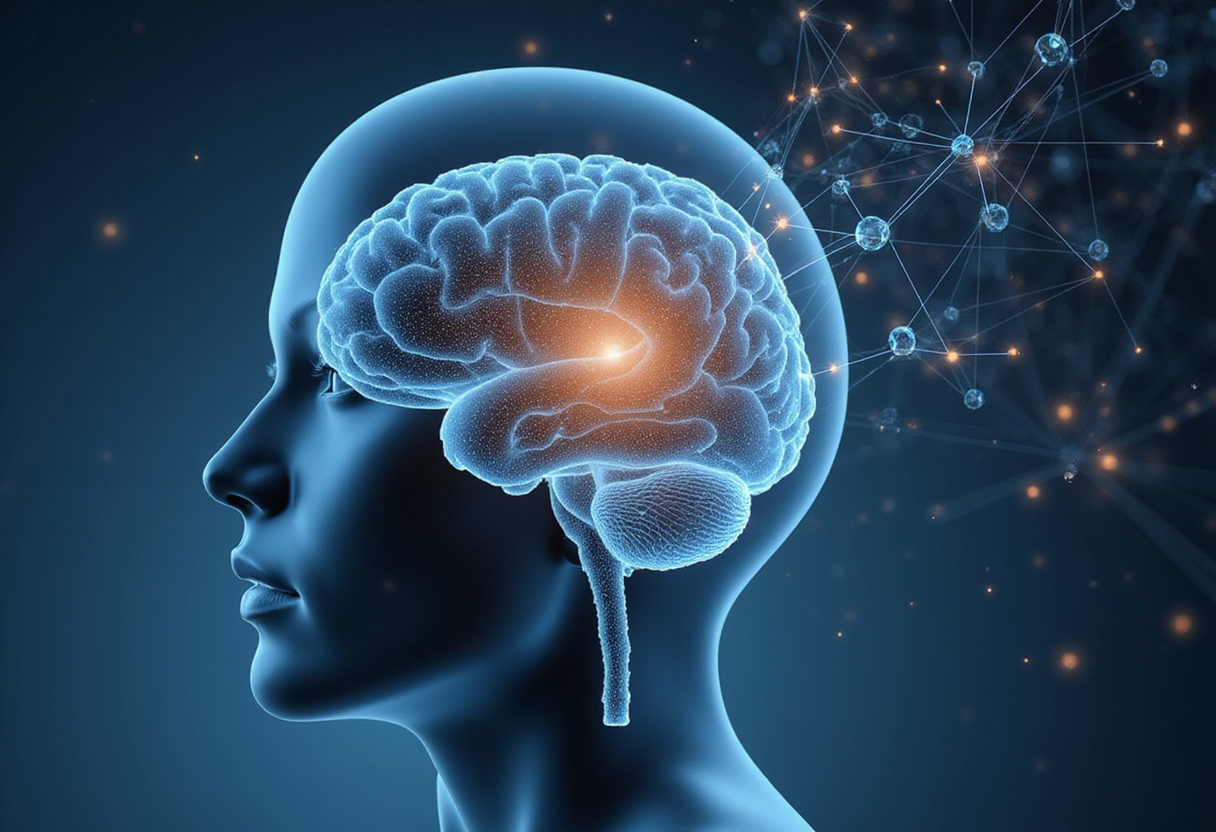
The 2026 Nobel Prize in Physiology or Medicine will go to three researchers whose combined work turned optogenetics into a working neuroscience method: Karl Deisseroth of the Howard Hughes Medical Institute and Stanford University, Peter Hegemann of Humboldt University in Berlin, and Georg Nagel of the University of Würzburg. The Karolinska Institutet in Stockholm announced the award on Monday, citing the three "for their discoveries concerning light-gated ion channels and optogenetics."
What does the method actually do?
Optogenetics pairs light with genetically modified neurons, allowing researchers to switch individual cells on or off inside a living brain. According to the Karolinska announcement, the technique now lets laboratories show how nerve cells shape memories, feelings, and behavior in animal models. The same announcement states that the approach is being studied as a potential treatment for disease, without naming a specific indication, trial stage, regulatory milestone, or commercial partner.
Why three laureates for one method?
The Karolinska citation credits all three jointly for "discoveries concerning light-gated ion channels," recognizing foundational discoveries rather than a single instrument, paper, or clinical trial. Deisseroth holds a Howard Hughes Medical Institute appointment alongside his Stanford professorship; Hegemann and Nagel hold positions at Humboldt University and the University of Würzburg, respectively. The press release does not specify which funding sources supported the cited work beyond those institutional affiliations, leaving grant provenance undisclosed in Monday's announcement. R&D managers should note that the Howard Hughes Medical Institute itself is a major biomedical funder, not solely a research employer.
What are the method's known limits?
Optogenetics requires genetic modification of target cells and a physical light-delivery interface, two constraints that complicate human clinical translation. The Karolinska materials do not detail sample sizes, effect sizes, replication status, or specific methodological caveats for the cited discoveries. R&D managers should read the press notice as an announcement summary rather than a peer-reviewed methods document. The Nobel committee typically publishes a fuller scientific background within days of the announcement, which should carry the methodological detail missing from Monday's release.
How should R&D teams read this?
The award raises the profile of cell-specific neuromodulation tools at a moment when optogenetics-based approaches are moving toward translational use. R&D managers tracking neuroscience budgets should expect renewed grant-review interest in tool-development proposals tied to the technique, particularly in disease areas where circuit-level mechanisms remain poorly mapped. The publicity will also pressure institutional review boards and biosafety committees to standardize protocols for light-delivery experiments, an area where current practice varies widely across academic centers in Europe and North America.
What is still unanswered?
The Karolinska release does not state which specific discoveries each laureate contributed, the dates of the underlying publications, or whether commercial licensing has occurred from the laureates' institutions. It also does not disclose conflicts, sample sizes, or the committee's rationale for splitting the award three ways rather than two. The Nobel committee's full scientific background, expected in the coming days, should fill several of those gaps and give R&D teams a clearer picture of which findings the committee weighed most heavily.
What changes for stakeholders?
For grant offices, the announcement signals that optogenetics will retain its status as a fundable core method through at least the next review cycle. For tool vendors, the citation provides cover for capital expenditure on light-gated ion channel reagents and fiber-optic hardware. For clinical translation teams, the prize brings renewed attention to a method whose path from animal models to approved therapy has produced no cleared product to date.
The Karolinska Institutet's Monday announcement frames optogenetics as both a discovery platform and a candidate treatment strategy; whether the prize accelerates any single clinical program will become clearer when the committee publishes its scientific background in the coming days.
via STAT News (Source)
Filed under
- optogenetics
- nobel-prize
- neuroscience
- translational-research
- ion-channels
More from Rebecca Stone
Show full bio
Market editor covering marketplaces and e-commerce at Hypothesis Wire.
183 articles