Proceedings · Session S-607 · filed October 22, 2026
Translational ScienceSession paper
Blood Proteins Flag Prostate Cancer Risk More Than a Decade Early
Oxford Population Health measured 6,000-plus proteins in 2,555 men, finding markers of prostate cancer risk up to 15 years before diagnosis — validation still pending.
By Amara Osei4 min read731 words
Summary
- Study analyzed 982 men who later developed prostate cancer and 1,573 comparison men from the EPIC cohort, with ~16 years of follow-up.
- Twelve proteins were linked to prostate cancer diagnosed more than 15 years after blood collection; seven were linked to aggressive disease.
- More than 6,000 proteins were measured per blood sample.
- Proteins tied to known driver genes ERBB3, KRAS and NRAS correlated with aggressive disease diagnosed about a decade later.
- Authors state the proteins are not yet suitable for clinical tests; Cancer Research UK's PCAP programme will pursue validation.
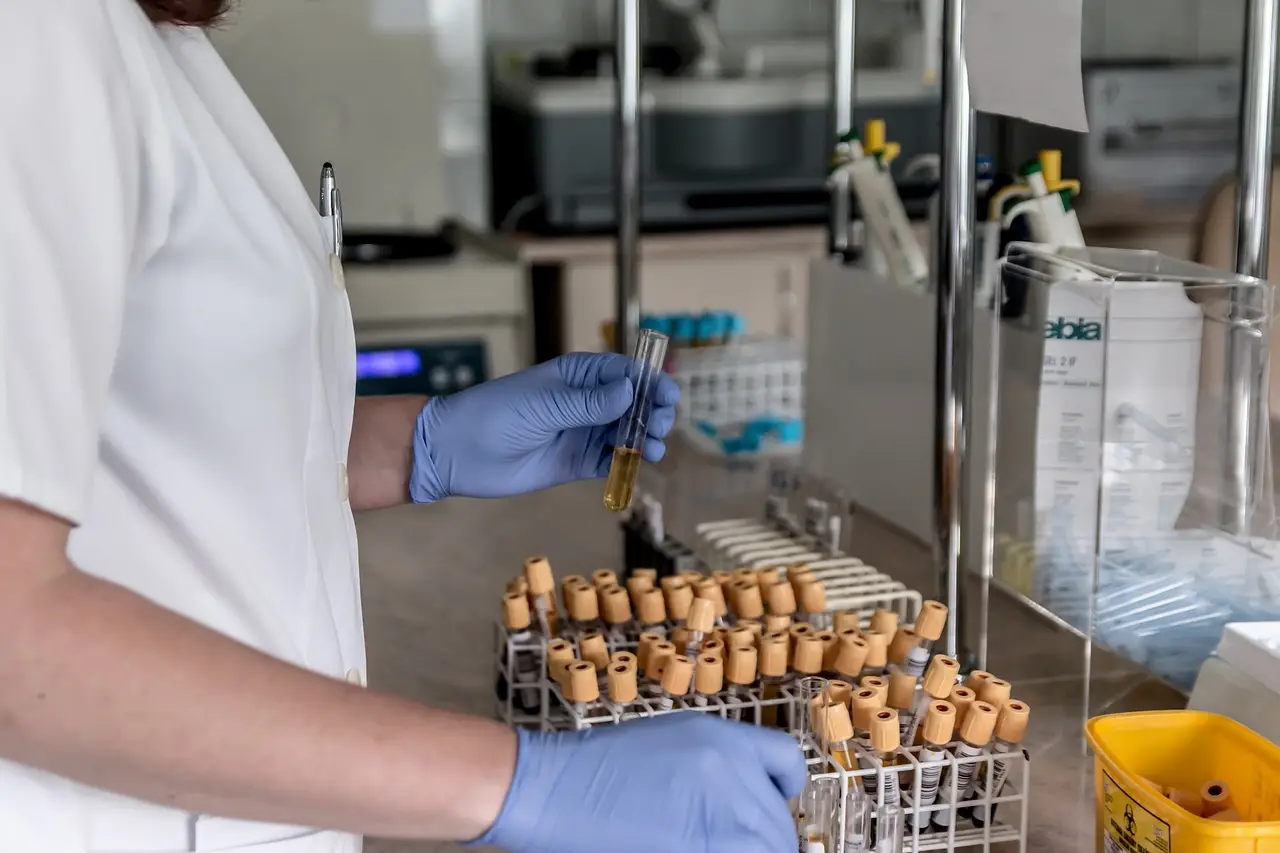
An Oxford Population Health study of more than 2,500 men has identified circulating proteins that differ between men who later develop prostate cancer and those who do not — with twelve proteins linked to diagnoses occurring more than fifteen years after the blood draw. The work, part-funded by Cancer Research UK and published in European Urology, was presented at the American Society of Human Genetics Annual Meeting.
The prospective case-cohort study analyzed blood samples from 982 men who subsequently developed prostate cancer and 1,573 randomly selected comparison men from the European Prospective Investigation into Cancer and Nutrition (EPIC). Investigators measured more than 6,000 proteins per sample and followed participants for roughly sixteen years — a per-participant observation window longer than most proteomic risk studies can claim.
What did the researchers actually measure?
The team, led by co-senior author Professor Karl Smith-Byrne, MPhil, DPhil, of Oxford Population Health, linked differences to proteins involved in immune function, cell adhesion, blood vessel formation, and known prostate cancer driver genes. The investigators described it as the largest population-based investigation of proteomic risk factors for prostate cancer to date.
Twelve proteins were associated with diagnoses more than fifteen years after sampling. Among them was GZMK, produced by immune cells that recognize and destroy abnormal cells — a hint, the authors suggest, that immune processes may hold prostate cancer in check long before clinical detection.
Seven proteins were tied specifically to aggressive disease. One, ANKRD1, was consistently linked to several serious forms, including cancers that had spread or proved fatal. Blood levels of proteins produced by known prostate cancer genes — ERBB3, KRAS, and NRAS — correlated with aggressive disease diagnosed roughly a decade later.
Smith-Byrne said: "Finding proteins linked to known prostate cancer driver genes in blood collected years before diagnosis gives us new insights into the earliest stages of the disease. Together with existing and future genetic evidence, these findings may help us identify biological pathways that could be targeted to prevent aggressive prostate cancer."
What the study does not say
The gene-protein links do not establish that cancer was already present at the time of sampling. The authors themselves frame the ERBB3, KRAS and NRAS findings as possible clues to biological changes preceding disease, not evidence of occult tumors. First author Zhe Huang, PhD, a postdoctoral epidemiologist at Oxford Population Health, was explicit about the heterogeneity problem.
"Prostate cancer is not one disease," Huang said. "Many prostate cancers grow slowly and may never cause harm, while others are aggressive and can be life-threatening. By measuring thousands of proteins in blood collected years before diagnosis, we can begin to investigate how men who later develop aggressive prostate cancer may differ from men who do not."
The validation picture is mixed. The researchers compared their results against other large population studies and genetic evidence; several findings held up, though not all could be confirmed. Most associations were modest in magnitude, and the authors state plainly that the identified proteins are not yet suitable as clinical tests.
What follows for researchers and R&D portfolios?
For proteomics and diagnostics groups, the immediate takeaway is candidate prioritization rather than assay development. The authors conclude: "Studies integrating tumor genomics and circulating proteomics will be required to clarify the relationship among circulating protein levels, genomic alterations, and disease development, and dedicated prediction studies are warranted to support their potential utility for biologically informed risk stratification."
The study's significance is contextual. Prostate cancer is the most commonly diagnosed cancer in men worldwide, yet established risk factors — age and genetics among them — cannot be modified, and preventive strategies are lacking. The researchers note that identifying individuals at future risk of clinically significant disease remains difficult because of the limited number of established predictors.
Next steps already have funding attached. The Prostate Cancer Aetiology and Prevention Programme (PCAP), supported by Cancer Research UK and co-led by Professor Ruth Travis, DPhil, will test whether these findings can contribute to better prediction or prevention. Travis said: "For the first time, technologies that allow us to measure thousands of proteins simultaneously are giving us unprecedented insight into the earliest stages of prostate cancer development."
Whether any of the twelve or seven candidate proteins survives dedicated prediction studies — and earns a place in a risk stratification panel — will depend on replications the current paper only begins to demand.
via dx.doi.org (Original)
Filed under
- prostate-cancer
- circulating-proteomics
- cancer-biomarkers
- risk-prediction
More from Amara Osei
Show full bio
News editor covering money, funding and market shifts around research and development at Hypothesis Wire.
209 articles
References
- UK Sovereign AI grant backs immune profiling of 80,000 Biobank samples
- Baylor Team Couples Proteomics and AI to Degrade VAV1
- Antibody access gaps stall translational research, report finds
- Mayo Clinic Maps 341 Cancer-Linked Gut Microbes Across 1,364 Patients
- UniQure's AMT-130 shows 44% slowing at four-year Huntington's checkup