Proceedings · Session S-978 · filed September 26, 2026
Research InfrastructureSession paper
Aging Flow Cytometer Fleets Face $570K–$760K Replacement Cost
A BD FACSAria II bought in 2009 died with its Windows XP motherboard. Replacing it with a spectral sorter now runs $570,000 to $760,000 for core facilities.
By Amara Osei3 min read625 words
Summary
- New spectral cell sorters cost approximately $570,000 to $760,000.
- The University of Chicago's Cytometry and Antibody Technology core retired a BD FACSAria II, purchased in 2009, after its Windows XP-based control computer's motherboard failed with no modern replacement available.
- Windows XP debuted in 2001, predating the sorter's purchase by eight years, illustrating that legacy IT components can end instrument life before analytical hardware degrades.
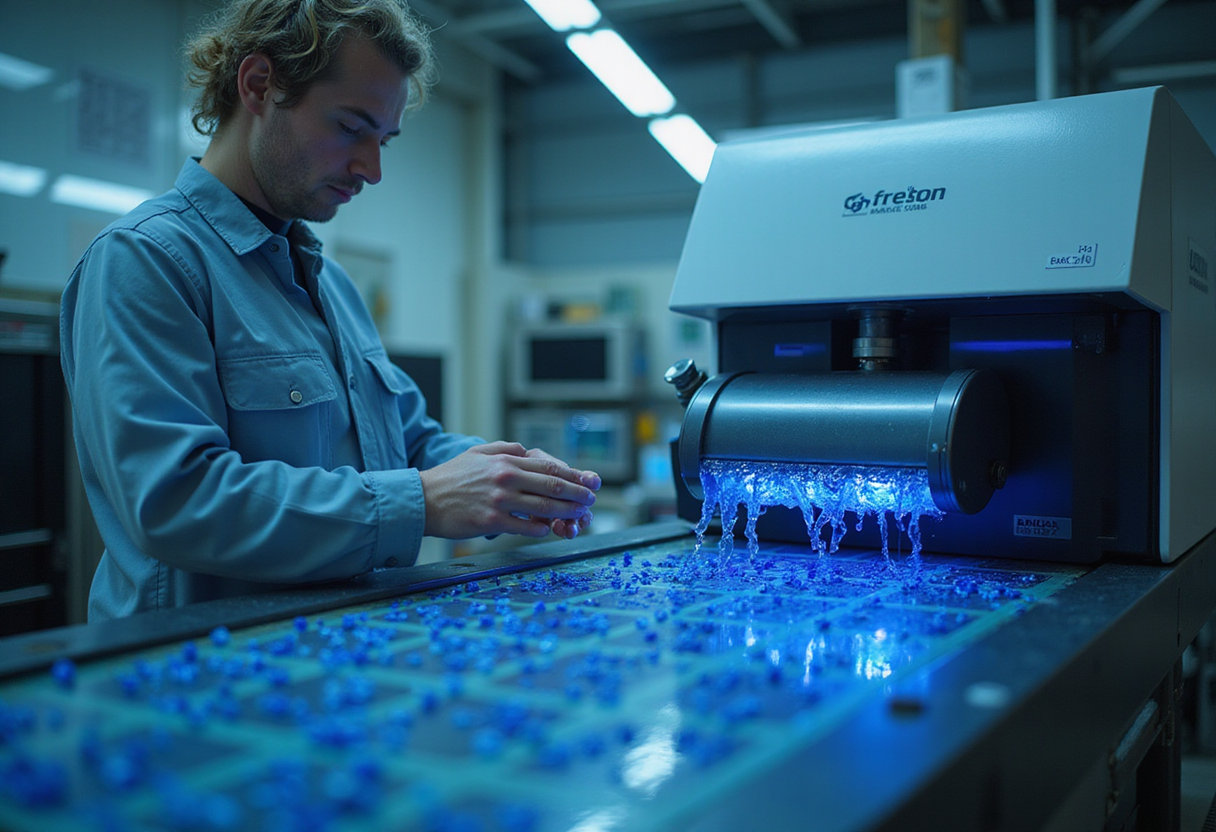
A new spectral cell sorter costs roughly $570,000 to $760,000, a price tag that lands squarely on the budgets of academic core facilities now managing aging flow cytometry fleets.
The scale of the problem is visible in a single, well-documented case. In 2023, David Leclerc, technical director of the University of Chicago's Cytometry and Antibody Technology core facility, described an instrument retirement that arrived earlier than planned. The facility had purchased a BD FACSAria II cell sorter in 2009. The computer controlling it ran Windows XP, an operating system that had debuted in 2001 — meaning the sorter's control infrastructure was already built on outdated software before the instrument was even installed.
The end came not from a decline in the sorter's optical or fluidic performance, but from commodity hardware failure. The computer's motherboard failed. No modern replacement part could revive a machine of that vintage, and the instrument left service.
For R&D managers who oversee shared instrumentation, the details matter. The FACSAria II did not fail because its lasers, detectors, or sort mechanics stopped working. It failed because the computing platform beneath it became unrepairable. That distinction shapes how facilities should plan replacement cycles: the binding constraint on instrument lifespan may be the availability of legacy IT components, not the analytical hardware itself.
The financial arithmetic is unforgiving. A facility that bought a sorter in 2009 and lost it to a motherboard failure has extracted roughly fourteen years of service — and now faces a capital outlay in the $570,000 to $760,000 range for a current-generation spectral replacement. Spectral sorters, which capture the full emission spectrum of fluorochromes rather than discrete bands, represent a substantial capability step up from the conventional filter-based detection of instruments like the FACSAria II. But that capability carries a price that few core facilities can absorb without institutional support, grant funding, or user-fee revenue built up over years.
The University of Chicago case also illustrates a broader structural issue in how shared research infrastructure ages. Core facilities typically acquire instruments through one-time funding — often equipment grants or institutional capital campaigns — and then operate them for as long as parts, software, and expertise remain available. Vendors eventually retire support for older platforms, operating systems fall out of security compliance, and spare parts disappear from supply chains. Each of those endpoints can arrive independently of the instrument's analytical usefulness.
Windows XP itself is a recurring character in this story. The operating system debuted in 2001, eight years before the Chicago facility's sorter was purchased, and Microsoft ended mainstream support for it long before the motherboard in question failed. Instruments running on obsolete operating systems pose not only maintenance risks but also network-security constraints, since IT policies at most research universities now restrict or prohibit connecting unsupported systems to institutional networks.
What should facility directors and the administrators who fund them take from this? First, replacement planning for cell sorters needs to account for the full control stack — computer, operating system, and software — as a single lifecycle unit, not just the sorter chassis. Second, the $570,000-to-$760,000 cost of a new spectral sorter means the replacement decision is a portfolio-level commitment, likely requiring multi-year budgeting rather than a single fiscal year's capital line. Third, facilities running instruments of the FACSAria II generation should be auditing their spares inventory now, particularly for computing hardware, before failures force unplanned retirements.
How quickly academic institutions move to refresh cytometry fleets built in the late 2000s and early 2010s — and whether funding models adapt to the cost of spectral platforms — will determine how many more sorters meet the same end as the one in Chicago.
via voices.uchicago.edu (Original)
Filed under
- flow-cytometry
- core-facilities
- instrument-replacement
- spectral-cell-sorter
- equipment-lifecycle
More from Amara Osei
References
- EU pushes training for next-generation research infrastructure staff
- IBM Commits Over $10 Billion to Fund Fault-Tolerant Quantum Roadmap
- Siemens Healthineers Puts €10m Into Lab Equipment R&D Centre in Ireland
- Sandia Overhauls Saturn Accelerator After 4,726 Shots and 37 Years
- Sandia and Quantinuum Validate 98-Qubit Helios Trapped-Ion System